Kandy sits in Sri Lanka’s central hills at about 500 meters elevation, making it cooler than coastal cities while not as cold as higher hill stations. This was the last capital of Sri Lankan kings before the entire island came under British control in 1815. The city’s historical importance and religious significance make it essential for understanding Sri Lankan culture.
The city surrounds an artificial lake with hills rising on all sides, creating a natural amphitheater. This setting gives Kandy distinct character compared to other Sri Lankan cities. The combination of religious importance, historical significance, and scenic beauty draws both pilgrims and tourists year-round.
Where is Kandy
Kandy lies roughly in the center of Sri Lanka, about 115 kilometers northeast of Colombo. The journey from Colombo takes 2.5 to 3 hours by road, while the train route takes slightly longer but offers more scenic views.
The city serves as a natural base for exploring the Cultural Triangle and hill country. Sigiriya, Dambulla, and the tea country around Nuwara Eliya are all within a few hours’ drive. This central position makes Kandy a logical stop on most itineraries.
Temple of the Sacred Tooth Relic
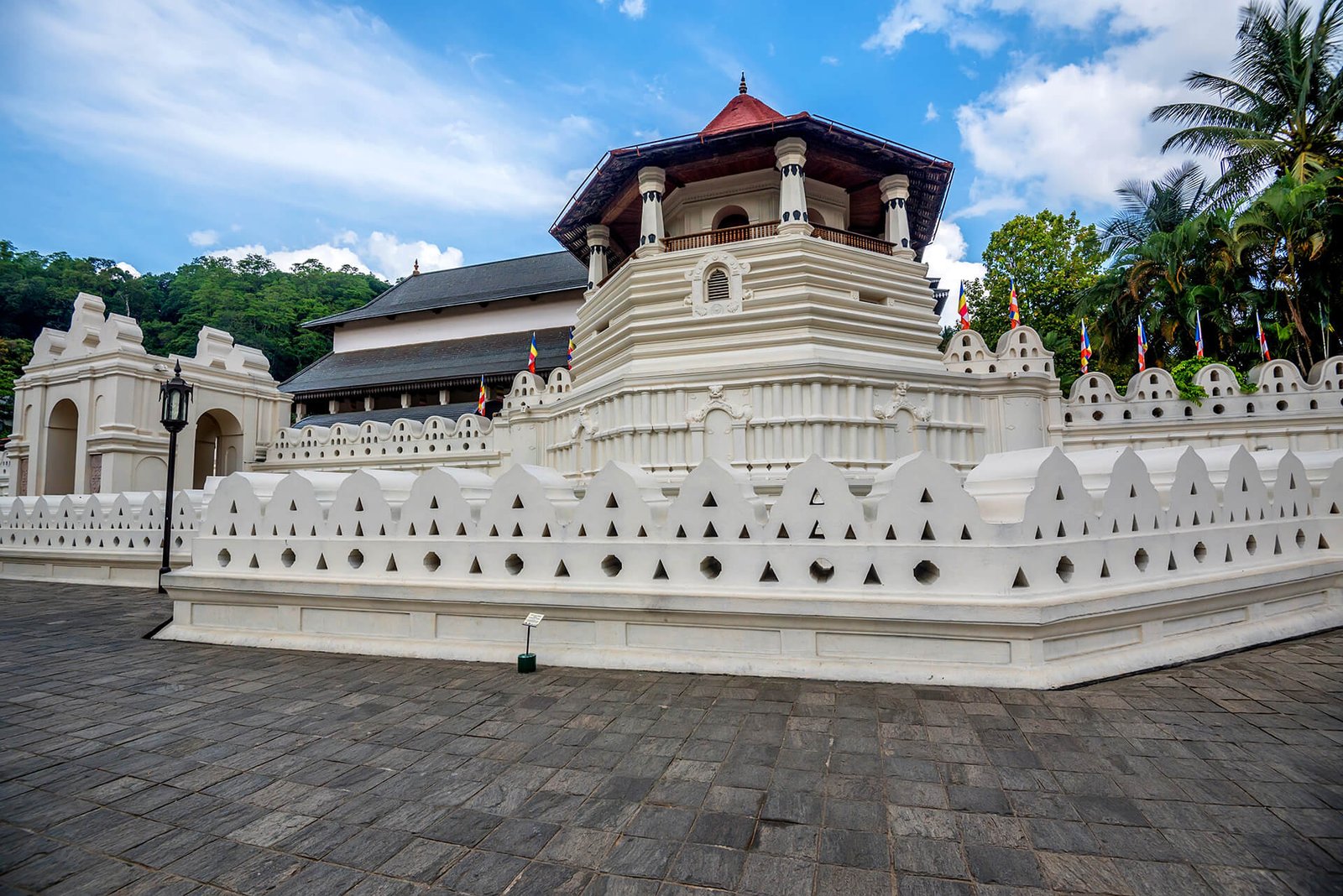
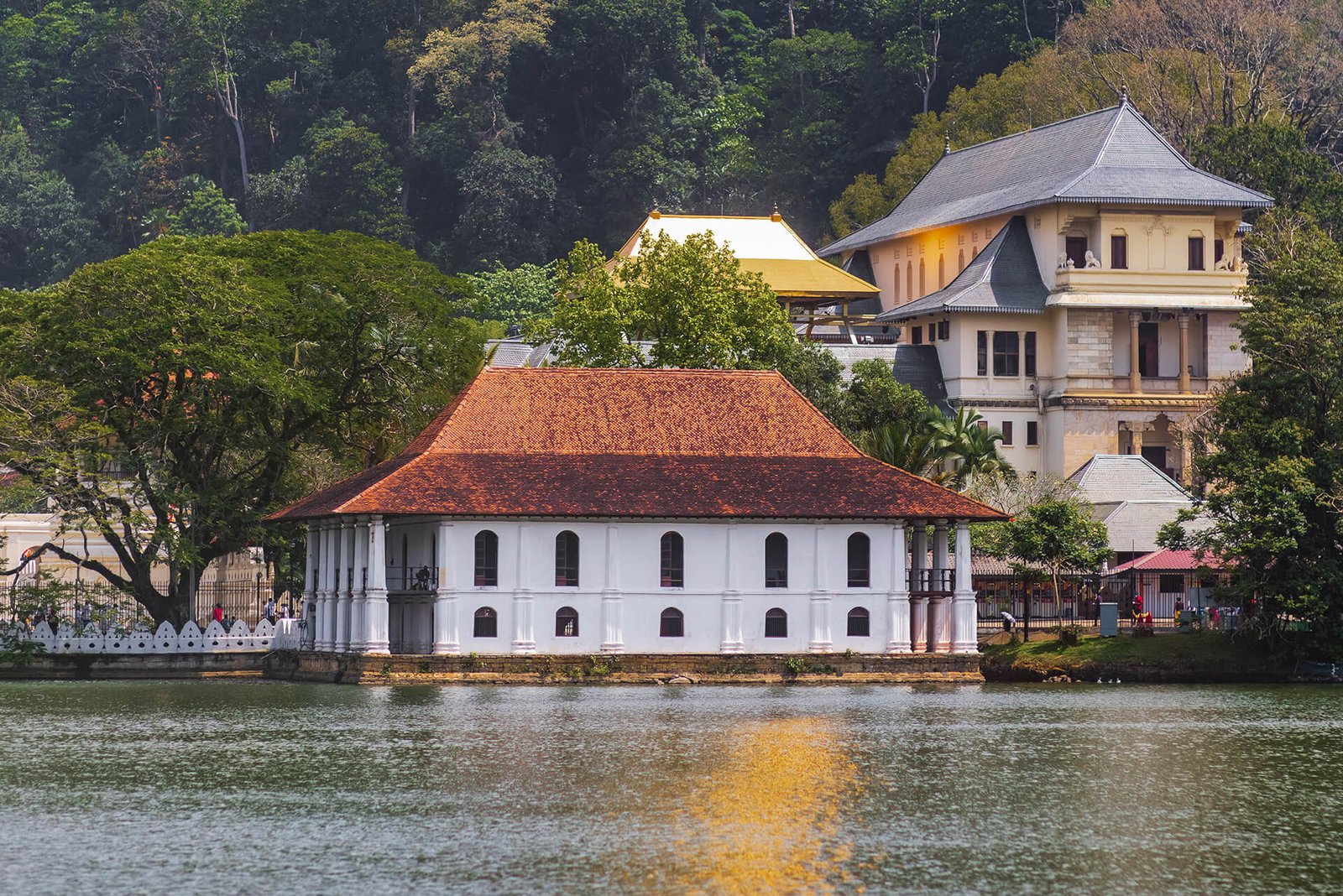
The Temple of the Sacred Tooth Relic is Kandy’s main attraction and Sri Lanka’s most important Buddhist shrine. The tooth relic of Buddha is housed here within multiple golden caskets. While visitors cannot see the actual tooth, the daily worship ceremonies and the temple’s religious significance make visiting profound.
The temple complex includes shrines, museums, and libraries within its walls. Buildings display Kandyan architectural style with distinctive roofs and carved pillars. Moats and walls protect the temple, reflecting its importance and the turbulent history of protecting this sacred object.
Daily pujas (worship ceremonies) occur three times: morning, midday, and evening. The evening puja is most atmospheric, with traditional drumming accompanying the rituals. The sound of Kandyan drums reverberating through the temple creates powerful ambiance.
Visitors must dress modestly with covered shoulders and knees. Shoes must be removed before entering the temple proper. Security is tight due to the temple’s significance, with bag checks at entrances. Photography is allowed in some areas but restricted in the inner shrine room.
Kandy Lake
The artificial lake in front of the Temple of the Sacred Tooth was created by the last king of Kandy in 1807. The lake adds to the city’s scenic beauty and provides a peaceful walking path around its perimeter.
Early morning and evening walks around the lake are popular with both locals and visitors. The path offers views of the temple, surrounding hills, and various water birds. The walk takes about 45 minutes at a leisurely pace.
The small island in the middle of the lake was supposedly used by the king for private relaxation. Today it’s protected as a bird sanctuary. The lake doesn’t allow swimming or boating, preserving its ceremonial and aesthetic purpose.
Kandy Esala Perahera
The Kandy Esala Perahera is one of Asia’s grandest religious festivals, held annually in July or August over ten nights. The procession honors the Sacred Tooth Relic with increasingly elaborate parades each night, culminating in the magnificent final procession.
Decorated elephants form the centerpiece, with the main elephant carrying a replica of the tooth relic casket. Traditional dancers, drummers, fire performers, acrobats, and flag bearers accompany the elephants through Kandy’s streets. The procession involves hundreds of performers and can last several hours.
The spectacle requires months of preparation, with families passing down roles in the perahera through generations. If your visit coincides with the festival, attending is essential. However, accommodation becomes expensive and scarce during these dates, so early booking is necessary.
Royal Botanical Gardens, Peradeniya
The Royal Botanical Gardens, located 5 kilometers from Kandy in Peradeniya, cover 60 hectares along a bend in the Mahaweli River. Originally a royal pleasure garden, it became a botanical garden in 1821 under British administration.
The gardens contain over 4,000 plant species, including a famous orchid collection with native and hybrid varieties. The avenue of royal palms, planted in 1905, creates a majestic entrance. Giant bamboo clumps, some reaching 40 meters high, form impressive groves.
A section displays trees planted by visiting dignitaries over decades, creating a living record of diplomatic visits. The gardens’ riverside location and mature trees provide shade and cooling breezes, making it pleasant even during warm days.
Allow 2-3 hours to explore the gardens properly. Early morning visits beat crowds and heat. The gardens are popular with local families on weekends, creating lively atmosphere though larger crowds.
Bahirawakanda Vihara Buddha Statue
A large white Buddha statue sits atop Bahirawakanda hill overlooking Kandy. The statue stands 27 meters tall and is visible from much of the city. Visiting the statue provides panoramic views of Kandy, the lake, and surrounding mountains.
The climb involves steep steps, but the views reward the effort. The site is particularly beautiful at sunset when the city below begins lighting up. The statue itself is relatively modern, completed in 1992, but the hilltop location makes it worthwhile.
Kandy View Point
For those who prefer less climbing, Kandy View Point on the road to Mahiyangana offers accessible panoramic views. The viewpoint looks over the city and surrounding valley, particularly beautiful in morning light or late afternoon.
Traditional Arts and Crafts
Kandy is a center for traditional Sri Lankan arts. The city has cultural centers offering daily performances of Kandyan dance, fire walking, and traditional drumming. These evening shows, while tourist-oriented, preserve and showcase authentic art forms.
The performances typically last about an hour and include multiple dance styles, demonstrating the variety within Sri Lankan dance traditions. The elaborate costumes, athletic movements, and dramatic fire walking finale create entertaining and culturally informative experiences.
Kandyan drumming is distinctive, with powerful rhythms driving ceremonies and performances. The drums themselves are works of art, traditionally made from specific woods with intricate decorations.
Gem Museum and Workshops
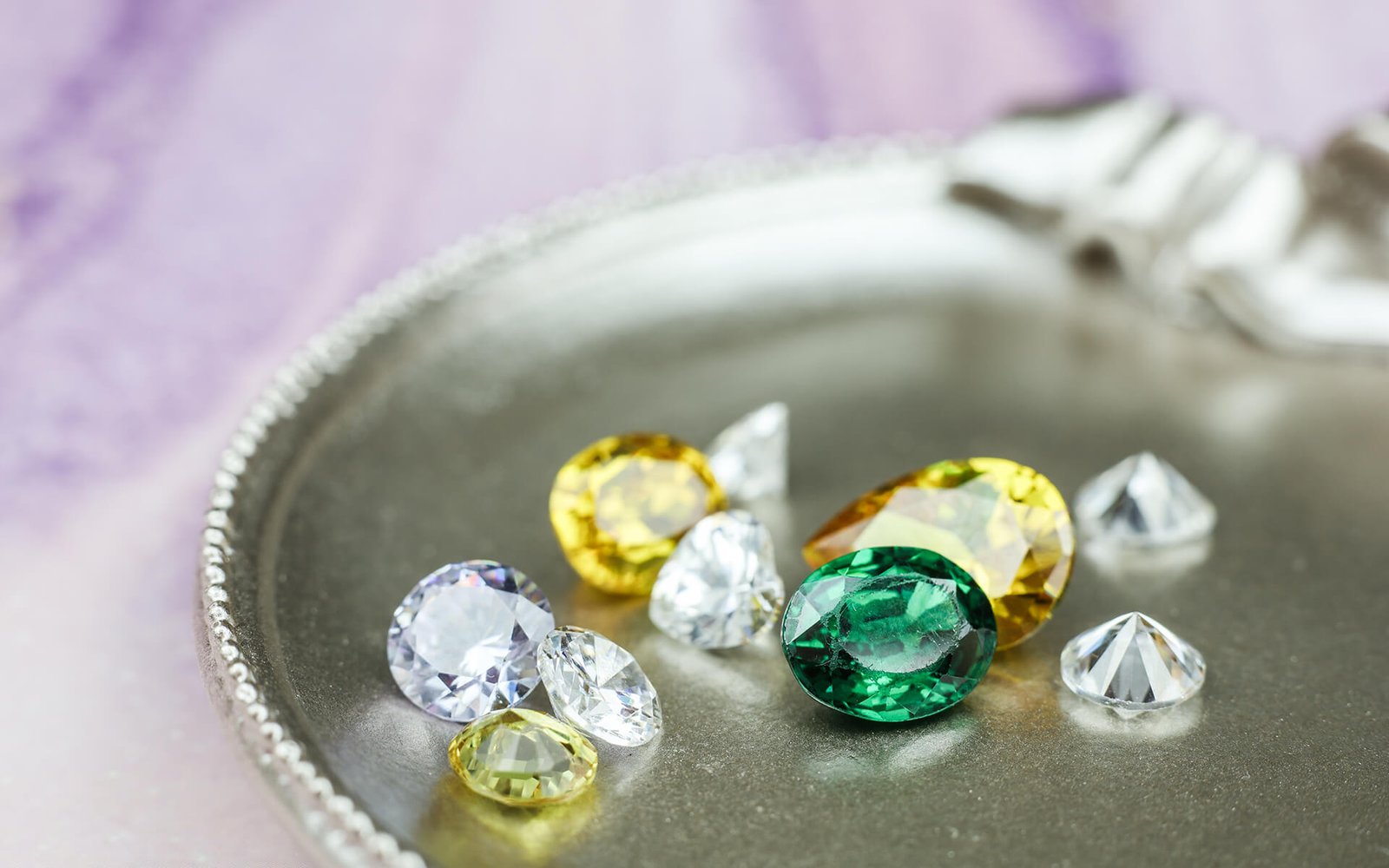
Sri Lanka is famous for gemstones, and Kandy has several gem museums and workshops. These facilities show the gem-cutting process and display various stones found in Sri Lanka, including sapphires, rubies, and cat’s eye.
While these are commercial operations hoping for purchases, they provide genuine education about Sri Lankan gems. The lapidary demonstrations showing how raw stones are cut and polished are interesting even if you don’t intend to buy.
Markets and Shopping
The Kandy Market Hall operates daily, selling vegetables, fruits, fish, and spices. The upstairs section has shops selling textiles, jewelry, and souvenirs. The market provides glimpses of daily life and local commerce, though expect persistent seller attention in souvenir sections.
Several shops around the lake sell handicrafts, batik, masks, and other traditional items. Quality and prices vary significantly, so some comparison shopping helps. The Ceylon Tea Museum in nearby Hantane explains tea production history in Sri Lanka.
Day Trips from Kandy
Kandy’s central location makes it an excellent base for day trips. Sigiriya and Dambulla are about 2-3 hours away. Pinnawala Elephant Orphanage is an hour’s drive, where orphaned elephants are cared for and can be observed during bath times.
The Knuckles Mountain Range offers hiking opportunities an hour or so from Kandy. Tea plantation visits in the surrounding hills provide insight into Sri Lanka’s most famous export product.
Best Time to Visit Kandy
Kandy experiences two monsoon seasons but can be visited year-round. December to April offers drier weather, though prices and crowds peak during this period. The intermediate seasons of March-April and September-October often provide good weather with fewer tourists.
If attending the Esala Perahera is a priority, book accommodation months in advance. The festival’s dates change annually based on the lunar calendar, typically falling in July or August.
Climate Considerations
At 500 meters elevation, Kandy is noticeably cooler than coastal areas but not as cool as higher hill stations. Daytime temperatures are comfortable, typically 20-30°C, while evenings can be pleasantly cool. Rain can occur any month, so pack appropriate clothing regardless of season.
Getting Around Kandy
Central Kandy is walkable, with the lake, temple, and nearby attractions accessible on foot. Tuk-tuks are available for longer distances or when tired. Many sites outside the immediate center require transportation, which can be arranged through your accommodation.
The traffic and narrow streets make driving yourself stressful. Most visitors either walk in town or arrange cars with drivers for day trips and transfers.
Where Kandy Fits in Your Itinerary
Most visitors spend 1-2 nights in Kandy, which allows time for the main temple, lake area, botanical gardens, and perhaps one day trip. The city serves well as a transition point between Colombo and hill country destinations like Nuwara Eliya or Ella.
Combining Kandy with nearby Cultural Triangle sites creates a comprehensive cultural tour. From Kandy, you can either continue to the hill country or head back toward Colombo and the coast.
Our tours through Kandy are designed to help you understand the city’s cultural and historical significance. We arrange visits to the Temple of the Sacred Tooth during puja ceremonies for the full experience, include cultural performances, and organize day trips to surrounding attractions. Whether you have limited time or want to explore Kandy deeply, we create itineraries that reveal why this city has been the cultural heart of Sri Lanka for centuries. Contact us to experience Kandy’s unique character.